New Forums for a New World

* This article was published in Catalan on 12 December in the daily ARA.
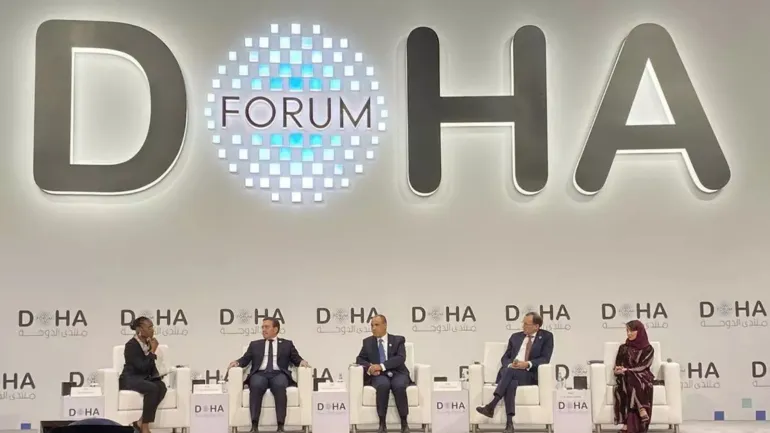
In the present situation of crisis of the West and transatlantic relations, new international forums in Qatar, India, and Turkey are taking on a crucial role as meeting points between old and new world elites. While the EU finds relations with Washington increasingly difficult, new regional powers beyond Europe seem to be adapting faster to the new Trumpist status quo.
Just as the world’s leading figures are no longer the same as they used to be, the forums where international relations are discussed are no longer the same either. Since Trump decided to abandon globalisation, to push protectionism, and to establish barriers to international trade in the form of tariffs, Davos, the gathering place par excellence of international elites, has been looking for a new purpose.
The last meeting of the Munich Security Conference was used by Vice President J.D. Vance to launch a full-scale attack on European democracies, and urge regime change in Europe with the support of patriotic and far-right political groups.
lf Western summits are in crisis and the transatlantic relationship is falling apart in plain sight, new emerging forums symbolise the changeover, and are shifting into the world of ideas the multipolarity that already governs international relations.[JB1] Hence, the Raisina Dialogue in New Delhi, the Antalya Diplomacy Forum in Turkey, and the Doha Forum in Qatar are gaining prominence. They have all become instruments of thought and mobilisation for actors in new centres of international power where the structuring of discussion about a post-Western world is happening.
A few days ago, Trumpism and the American old guard were both making a point of their presence at the Doha Forum. In an exercise of free journalism, Hillary Clinton was challenged by her interviewer and criticised for being stuck in the world of yesterday. By contrast, Donald Trump Jr., a partner in the investment fund that is growing richer because of his father’s presidency, received the treatment that is so appreciated by the new acolytes of authoritarianism: a cosy interview where he praised Trump’s unpredictability as a negotiating tool and continued admonishing the Europeans, saying that America needs more allies like Qatar and fewer like the European Union.
One day earlier, Kaja Kallas, the EU High Representative for Security Affairs and Foreign Policy, could not have expressed Europe’s strategic disorientation more clearly when she told her audience that the “US is still our biggest ally”, even though the White House National Security Strategy had stated in black and white that Washington considers the EU to be a space where freedom of expression is censored, where its failed focus is “regulatory suffocation”, and where immigration is leading to “civilizational erasure”.
The transatlantic breach is expressed in the new spaces of dialogue where hosts like Qatar flaunt their status as regional powers. It is no longer the case that only China and Russia want to lead tomorrow’s world. Middle-sized regional and strategic powers in domains like energy are also key players in the prevailing multipolarity.
A year ago, the Doha Forum was the setting where Bashar al-Assad’s allies decided to withdraw their support for him. At a meeting on the sidelines of the official programme, representatives from Russia, Turkey, and Iran confirmed that advances being made by the opposition made it preferable to back a new leadership. A few days later, Assad left Damascus for Moscow and the opposition found in the former jihadist Ahmed al-Sharaa the man to head the new interim government. This year, Ahmed al-Sharaa, now Westernised in clothing and manner after a visit to the White House not long beforehand, was received at the Doha Forum with all the protocol due to a head of state.
Qatar and spaces of debate like the Doha Forum are better adapted than Europe is to the new uncertainties of global politics. Sheikh Mohammed bin Abdulrahman bin Jassim Al Thani, Prime Minister and Minister of Foreign Affairs of this small Gulf state, was interviewed by none other than Tucker Carlson, a key political commentator for Trumpism and the MAGA movement. Al Thani made the most of the interview to draw attention to the alliance between the United States and Qatar which, now emerging as a mediating power in the region’s conflicts, is also clearly working in accordance with Donald Trump’s peace agenda.
Carlson who, only a few days earlier, had been accused of platforming antisemitism after interviewing in his programme the far-right agitator Nick Fuentes, asked Al Thani about Qatar’s neutrality, especially since this country is a haven for the exiled leadership of Hamas. The latter responded that Qatar’s relations with Hamas have always been in the service of peace and, in a clear reference to Israel, noted that other forces have been trying to undermine Qatar’s good relations with the United States and the shared wish of the two countries for peace in the region.
Some might call this opportunism dressed up as mutual blandishment. However, the fact is that, while Al Thani and Carson were demonstrating Qatar’s ability to adapt to the new MAGA times, the audience remembered the moment when, in a forced conversation between the Israeli prime minister and his Qatari counterpart, an attentive phone-wielding Donald Trump prompted Benjamin Netanyahu to apologise to Qatar for bombing Doha. The new world is coming together in new forums and those being left out are the Europeans.
Key words: international forums, Trump, EU, Doha, multipolarity, regional powers
E-ISSN 2014-0843
All the publications express the opinions of their individual authors and do not necessarily reflect the views of CIDOB or its donors