Democracy in Europe: protection or reinvention
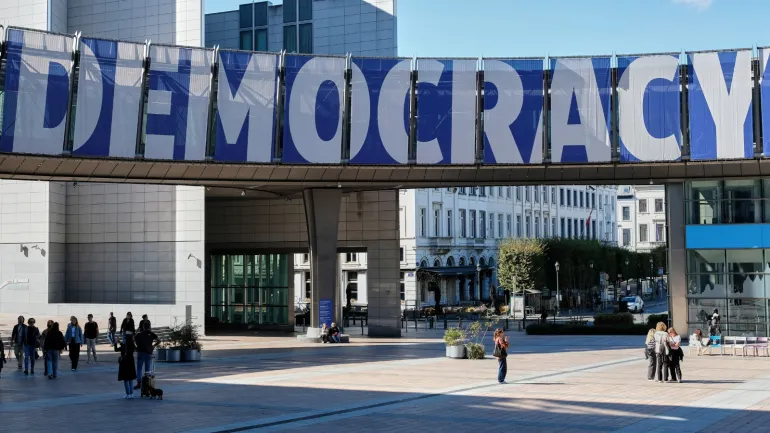
The democratic model of the European Union (EU) is eroding from within and under attack from outside. Problems like disinformation or a lack of technological sovereignty are combining with the rise of polarisation and authoritarian tendencies.
In a climate of democratic backsliding across the world, coupled with an anti-European entente between old authoritarian powers and new illiberal governments, the EU is debilitated and its citizens are disillusioned.
Given this landscape, the EU must move past merely taking a defensive position and reinvent itself, injecting its model with dynamism and reforms in order to recover its appeal to citizens and to the rest of the world.

Liberal democracy is in crisis. The democratising trend the world witnessed after the end of the Cold War, coinciding with the “unipolar moment”, peaked in 2006. Since then, it has been in decline, intensifying with the COVID-19 pandemic. Ever more countries are tending towards a model of flawed democracies or authoritarian or semi-authoritarian regimes. Democracy is in a global downturn, and only a small percentage of the world’s population lives in countries that can be considered “full democracies”. In 2024, for the first time in two decades there were fewer democracies than autocracies worldwide, according to the Democracy Report 2025 (V-Dem Institute).
Most indicators say Europe remains one of the most democratic regions on the planet. Freedom House’s latest annual report describes it as the “freest region in the world” and the Democracy Index 2024 by the Economist Intelligence Unit (EIU) comes to a similar conclusion, ranking it above North America for the second year running. In fact, the EU political project flourished in the unipolar moment. Some even predicted that the 21st century would be the European century, as the 20th century had belonged to the United States. With its post-national model of multilevel governance and its single market, the EU sent the signal that its system worked and was exportable. Economic prosperity brought democracy, and in a more democratic and economically interdependent world armed conflicts became less likely. Yet right now not even Europe is immune to this global trend, and its democracies face significant challenges from both external influences and internal factors. The 2025 V-Dem Institute report reckons that the gradual decline in Western Europe has sent the region back to levels of democracy similar to those registered in the early 1980s.
Various events and successive crises have undermined the idea of the EU as a bastion of democracy and material prosperity. The economic rise of China has challenged the modernisation theory that held there was correlation between economic growth and democratisation. The theory that prosperity and the existence of a middle class makes democratic backsliding more unlikely has also been called into question. The erosion of democracy seen in Poland or Hungary, for example, despite the economic growth recorded since they joined the EU, is testament to that. In addition, the “permacrisis” around the EU has cast doubt on the capacity of liberal democracies to sustain their normative narrative, in other words, the capacity to respond to different crises through their institutions and regulation.
The digital transition has had a major influence on this process of democratic regression. In its initial stages, the internet promised to be a tool of democratisation (thanks to its capacity to host online debate, help take decisions, democratise citizen participation and so on) and of liberation (by facilitating communication and organisation among opposition movements and dissidents in autocratic regimes). Emerging technologies, however, have always proven to be a double-edged sword. The internet and social media are not only liberation technologies, but also instruments of control and geopolitical power. Digital control of citizens springs both from the state and from the private sector, often in league with one another, as demonstrated by the cases of mass spying on the part of the US National Security Agency (NSA) or the deployment of mass digital surveillance by the Chinese government. Governments monitor citizens on the web while big tech monetises users’ data and attention, integrating extreme content and disinformation into their business models. These online dynamics have tangible consequences in the analogue world by impacting on the polarisation of users and on the health of democracy.
In the past and the present, the EU has failed to reflect on the limitations of its own democratic system. When the bloc tried to export its model beyond its borders, it never wondered why European-style liberal democracy flourished in only a very few countries outside the continent. Now it is on the defensive, the lack of introspection on its own model means that virtually all its efforts are focused on protecting the system and not on how to reform it to make it more appealing, be it internally or to the rest of the world. What’s more, the context has changed. In order to protect democracy in the EU, there is a need to respond both to phenomena that occur online and offline. And not only that. It also requires thinking about how to reinvent it.
Democracy is a model that has shown it is possible to promote economic growth and social welfare without having to renounce individual and collective rights. Throughout its history, democracy has been a dynamic phenomenon that has incorporated reforms and changes to rise freely and fairly to the challenges of the moment. Democracy needs protecting, but it also needs to adapt and even reinvent itself. If not, the democratic model will stagnate, fossilise and be more vulnerable to internal challenges and external shocks.
Online threats: the digital ecosystem as a democratic battleground
The virtual world has a direct impact on the analogue reality of democracy. The European Union has noticed that the digital transition entails risks to democracy and to be able to defend it there is a need for technological sovereignty that provides the bloc with the material capabilities and economic and geopolitical power required to defend its model and its digital values. Currently, the EU is heavily dependent on major tech companies, most of which are of US origin (Amazon, Alphabet, Meta, Microsoft, X or OpenAI), though some are Chinese too (ByteDance, Alibaba and Deepseek).
These big corporations provide most of the digital infrastructure underpinning our activity online, be it through virtual service platforms or datacentres offering cloud services. While it is often stored inside European territory, a huge amount of European citizens’ data is ultimately under the control of non-European companies subject to external jurisdictions. In this sense, European technological sovereignty is far from being a reality. In addition, thanks to this infrastructure big tech has created a market for the exchange and generation of virtual content based on the “attention economy”, built with algorithms that prioritise showing content that keeps users connected the longest. In this way, the companies increase profits through data extraction and ad exposure. But maximising usage time often enters into conflict with considerations of a political, social or ethical nature. For example, recommendation algorithms tend to favour extreme content, because it can generate bigger dopamine hits and cause addiction. A problem with this business model is that it amplifies disinformation on social media, which can lead to the radicalisation of different social groups. By exploiting this social media business model, third-party actors can attempt to interfere in electoral processes, promoting certain candidates, discrediting others or casting doubt on the legitimacy of the elections (as occurred in the recent cases of Romania, Germany or Moldova).
To respond to these negative externalities of social media, the EU has developed a legislative framework made up of a series of regulations – the General Data Protection Regulation (GPDR), the Digital Services Act (DSA), the Digital Markets Act (DMA) and the AI Act – with a view to promoting European sovereignty and digital values. Underpinning this rationale is the desire to extend the “Brussels effect” to the digital space, the idea that EU regulations can set global norms that protect citizens’ digital rights, hold the tech platforms accountable and promote European standards worldwide. Yet on multiple occasions that desire has clashed with the business interests of US big tech corporations, which currently have an ally in Donald Trump in their deregulatory onslaught. At the same time, there is an internal debate in the EU on the impact of regulation on competitiveness, with a European Commission that has tempered its ambitions in the face of tech interests, opting to reduce the levels of regulation.
Against this backdrop, structural problems like the tech giants’ lack of transparency, the resistance to accountability or the dismantling of content moderation mechanisms appear to be crystallising or escalating. On top of all these problems is the boom in artificial intelligence (AI) over the past few years. Cheap content generation through LLMs (large language models) is combining with disinformation and promotion of radical content that already existed in recent decades. Using fake images, videos or audios – deepfakes – the peddlers of disinformation have new and effective tools to upscale their activities, boosting the capacity to interfere in elections and the creation of personalised messages (microtargeting) to influence democratic decision-making processes. Thanks to the emotional impact of sound and images, deepfakes are more persuasive and harder to debunk than disinformation based solely on text. AI also makes its possible to generate messages to create unreal interactions between voters and bots (automated interactive programs), with the potential to disrupt elections. Coupled with that are the new strategies of the actors spreading disinformation to “poison” search results through the use of AI chatbots. Russia, for example has generated a huge number of websites full of bogus information with the aim of getting it to show up in AI chatbot answers, or so that these websites are used inadvertently to train new AI models.
Faced with these threats posed by technology and disinformation, how can the EU respond effectively without sliding into censorship? One option could be the regulation not so much of internet content, but the infrastructure that makes it possible. The regulation activated by the DSA seeks to increase algorithmic and data transparency so that the platforms shoulder their responsibility in the digital media ecosystem. Digital literacy also has an essential role as a democracy strengthening tool. Hence the Audiovisual Media Services Directive (AVMSD) requires EU member states to promote and adopt measures to develop digital literacy skills.
The independence and economic viability of the media, meanwhile, is vital if we are to have quality journalism that offers verified content. The EU is looking to protect its journalists to combat political interference in the editorial decisions of media providers, both public and private, as well as protect professionals and their sources to guarantee the freedom and pluralism that the media represent. The European Media Freedom Act (EMFA) addresses this need, as does the Media Resilience Programme, in the European Commission’s latest democracy protecting tool (the EU Democracy Shield). But these regulatory measures may prove inadequate in the face of the impact AI could have on media outlets’ business models. As ever more users look for news through AI apps rather than via web browsers or traditional media the sources of income in the journalism sector are shrinking, while at the same time the siren calls to replace content created by humans with AI-generated content grow louder.
Offline threats: polarisation, far right, distrust and democratic fatigue
The digital and analogue worlds act like echo chambers. If what happens online feeds into what happens in physical reality, the analogue world also has an impact on the digital sphere, with the two processes forming a feedback loop. Accordingly, there are challenges that can be considered existential for the good health of liberal democracies: rising polarisation, accompanied by the growth, consolidation and normalisation of the far right; distrust of the institutional framework that sustains the democratic system; and a democratic fatigue that facilitates the transition to authoritarianism.
Polarisation is on the rise in Western democratic societies, both in terms of issues – it is increasingly difficult to find common ground – and emotions – politics is split into trenches of identity. Emanuele and Marino (2024) say that polarisation has increased significantly in Western Europe and the United States since the 2000s, particularly after the financial crisis of 2008, with the average voter shifting steadily to the right in contexts where the party system has fragmented and voting is more volatile. These authors also conclude that the rise in this polarisation in Western Europe is not due to the radicalisation of the traditional parties, but to the shift in the balance of power between traditional parties and new parties with more radical positions.
There are two offshoots of these conclusions. First, the fragmentation of the party system has an impact on the smooth running of democracy: the more polarisation, the less democratic accountability and the harder it is to find shared solutions that the whole of society considers legitimate, meaning democracy is weakened in the eyes of its citizens. Second, polarisation may not have been caused by the radicalisation of the traditional parties, but they have certainly had a part to play in legitimising far-right positions. The rise of this radicalism has been driven by a process of normalisation and integration of its discourse, ideas and tenets in the political centre ground of most member states. It is a two-way mainstreaming process: on the one hand, far-right parties try to soften their image to gain credibility and power; on the other, the traditional parties adopt and legitimise many extremist ideas, particularly regarding immigration and national identity. In this way far-right parties have won enough electoral support to have a hand in the governments of at least a third of the EU member states through coalitions or confidence and supply arrangements, including Belgium, Croatia, the Czech Republic, Finland, Hungary, Italy, Slovakia or Sweden. These parties have capitalised on the discontent deriving from the current political, social and economic uncertainty, with a particular focus on the migration issue. The far right, then, can be considered a threat to democracy in that its voters are more inclined to authoritarianism.
This resurgence of a preference for authoritarianism is reflected in various studies. In 2024, for example, a survey by the Pew Research Center found that 31% of respondents in over 20 countries were supportive of authoritarian systems. Those who opted for authoritarian solutions were closer to the ideological right, came from middle-income countries (not to suggest there is no support for authoritarian options in high-income countries) and had lower incomes. Another survey by the same centre in the same year also found that 59% of the people consulted were dissatisfied with how democracy was functioning; 74% thought that elected officials didn’t care what ordinary people thought; 42% said that no political party in their country represented their views; and the people inclined to support a government with a “strong” leader had grown by 8% over the previous year.
At the same time, there appears to be little confidence that change is possible. In a recent survey also from Pew Research, 69% of citizens from among the 25 countries surveyed thought that their political system needed major changes. Filtered by age, the demand for change was higher among those between 18 and 34. In several of the surveyed countries, there was no confidence that the system was capable of channelling the required change. This is particularly relevant if we take into consideration that there is a correlation between the people of the countries who say they are “dissatisfied” with their democracy and those who do not have a positive view of the economy. People’s scepticism that democracy can reform, with economic changes or changes of another type, is reflected in the fact that dissatisfaction with democracy has increased by 15 percentage points since 2017, according to the same survey. And it is a trend that can escalate.
But there is not only discontent with democracy in general; there is a deep malaise with the very institutions of this system. A study published in 2025 in the British Journal of Political Science reported that trust in representative institutions such as parliaments, government and political parties had steadily declined in democratic countries from 1958 to 2019.
These surveys reflect a deep dissatisfaction with how democracy is functioning. The loss of confidence in institutions like parties, governments or parliaments indicates that representative democracy is fraying at the seams. Meanwhile, this dissatisfaction also points to a gradual loss of the moral authority that liberal democracy once had as the best tool for resolving the problems of humanity. Progressively, people living in democratic regimes appear to have increasingly less faith in their capacity to address the concerns that beset them.
Yet surveys like those of the Pew Research Center and Ipsos reveal that there is still a majority who continue to prefer democracy as the best alternative, which means defending it continues to be both a necessity and a politically profitable option.
What to do? Answers to democratic erosion
Given the dilemmas presented above, responses are needed that bolster European democracy against the multiple challenges that are calling it into question, both in the digital and analogue domains.
In the digital sphere, reinforcing digital rights must go hand in hand with protecting democratic spaces. The fundamental challenge is how to boost European competitiveness and tech capability – essential for achieving greater sovereignty in this regard – while at the same time preserving and reinforcing citizens’ digital rights, in a climate of pressure to reduce Europe’s regulatory power both from big tech and the United States. The EU must prevent the digital rights gained from disappearing in favour of a big tech technocracy. At the same time, however, it must also avoid the complacency of believing that its digital rights can be safeguarded without real material tech capability. There is a need to strike a balance that maintains the power of the “Brussels effect” while creating the essential digital infrastructure and services to make this viable. In times like these, the purely regulatory strategy is not enough.
Given this, the EU must also defend its democratic spaces against foreign interference from ever increasing fronts. Disinformation and meddling campaigns from rivals such as Russia or Iran and, to a lesser extent, China, India or Israel are now joined by those conducted by the United States. The current Trump administration, in collaboration with magnates like Elon Musk, is pursuing a strategy of promoting European far-right parties and applying heavy pressure to erode laws that defend digital rights like the DSA. Recently in European electoral contexts, there have been situations where the Russian disinformation machinery and US interference mechanisms have backed the same candidates, as in the cases of Romania or Germany. Responding to this meddling on several fronts is fundamental, but it is not so easy, particularly in the case of the United States, as various Central and Eastern European actors prioritise US military support over these problems of interference. Several Western European economies also think that taking a robust stance against Washington could worsen their economic prospects and political stability.
In the analogue sphere, it is essential to reinforce the institutional structures underpinning democracy, enhance public trust by restoring the connection between representatives and the represented, and improve the efficacy of the democratic system. Given the eventuality of more far-right forces gradually gaining power in various liberal democracies, it is imperative to fortify the structures that underpin democracy, from the rule of law to the independence of the institutions. Democracies do not disappear overnight; they erode gradually until they collapse. Hence some authors have suggested modernising legislative procedures to prevent government abuses and obstruction; safeguarding judicial independence; and strengthening electoral oversight and accountability to prevent ballot rigging and doubts about voting processes. There is also a need to depolarise democratic societies and return to a mindset where “others” are not enemies to be eliminated but adversaries with which to contest elections. Under this way of thinking, differences are settled as the adversaries share a common framework and the goal of serving the common good. They “only” disagree on the how, on the path to reaching this shared goal.
To enhance public trust, the OECD has developed principles that define “open governments”: transparency, integrity, accountability and stakeholder participation in support of democracy, among others. This means democratic representatives must be guided by integrity when it comes to performing their office, while transparency enhances accountability for citizens and the media alike, since they can better monitor the actions and decisions of public representatives. With regard to stakeholder participation, it is the incorporation of components of deliberative democracy, in other words, that decisions are the result of fair discussion among citizens, which can shore up democracy. And it can play a fundamental role in improving democratic quality and fortifying rulers and citizens’ dedication to democracy. Other mechanisms of citizen participation, such as the random selection of citizens to be part of decision-making processes, can also help to strengthen ties between representative and represented by including the latter in decision-making.
Lastly, democracy needs to reconnect with citizens and acknowledge their tangible and intangible needs. Tangible needs cover matters such as economic security (freedom from need). Democracy has to restore equal opportunities for its citizens and redress the inequalities rooted in both household income and in the capacity of large fortunes and multinationals to avoid taxation by exploiting loopholes in the system – with the acquiescence of certain states – and which costs the world half a trillion dollars a year in lost tax revenue. Intangible needs, meanwhile, arise from the need to belong. Democracy must reconnect with those citizens who do not feel part of the system and ensure their inclusion to strengthen and guarantee more cohesive societies.
Protection or reinvention
Protecting democracy is imperative in the short term. That said, the question arises of what system is being protected and if, in doing so, it is simply protecting a status quo that perpetuates something that no longer works. The narrative of protecting democracy sends the signal that any change is harmful, which given the pressure it is under stops it from evolving and improving.
The Ipsos study “The system is broken” reveals a deep public distrust in the system and its elites. For example, in 29 out of the 31 countries studied a majority of the public say that the economy is rigged to the advantage of the rich and powerful; in 23 they reckon that society is broken; and 64% of the people surveyed think that the political parties and politicians don’t care about ordinary people.
Given this trend, the defence of democracy cannot be presented as simply more of the same. There is a need to imagine a transformation of democracy based on, for example, the block, bridge and build framework. Blocking interference and attacks for protection, but also building bridges with those who distrust the system to leave no one behind and give them a sense of belonging, with the aim of addressing intangible needs. And building a new, inclusive and credible democratic promise that is capable of fixing systemic failures.
Pointing to Russia or China as the main sources of disinformation incurs barely any political cost. Understanding that future meddling may come from the United States, however, requires a shift in mentality. Targeting the far right and polarisation as democracy’s ills is to mistake the symptoms for the causes of the democratic challenges. Realising that the structural causes require changes at the heart of the democratic system demands not only reacting but also long-term planning and promoting brave and dedicated democratic leaderships. European democracy is not doomed to decline but protecting it will not be enough. It needs reinventing.
E-ISSN: 2013-4428
DOI: https://doi.org/10.24241/NotesInt.2025/329/en
All the publications express the opinions of their individual authors and do not necessarily reflect the views of CIDOB or its donors.