The AI Environmental Footprint: Between hidden costs and green opportunities

This briefing compiles the key insights and conclusions from the session “The AI Environmental Footprint: Between Hidden Costs and Green Opportunities”, organised by CIDOB in collaboration with the Barcelona City Council and the Cities Coalition for Digital Rights (CC4DR), and co-funded by the European Commission through the Citizens, Equality, Rights and Values (CERV) programme within the framework of the DigiDem-EU project. Held in Barcelona on 4 November during the Smart City Expo World Congress 2025, the discussion brought together leading experts and practitioners in the fields of artificial intelligence, digital governance, and sustainable urban development. Building on the exchanges that resulted from the session, this CIDOB Briefing the environmental, ethical, and governance implications of urban AI, with the dual aims of identifying shared strategies for its responsible deployment, and ensuring that digital innovation contributes to greener, fairer, and more resilient cities.

Introduction
Artificial intelligence has become a defining feature of contemporary urban life. Cities increasingly rely on intelligent systems to optimise infrastructure, anticipate maintenance needs, and manage environmental risks. Nevertheless, these technologies also pose a complex sustainability paradox. On the one hand, AI offers unprecedented opportunities to advance climate action, enhance resource efficiency, and monitor ecological challenges. On the other, its deployment demands considerable energy and material resources, from electricity-intensive data centres to hardware produced through extractive supply chains, which can exacerbate environmental degradation. This raises a fundamental question: are these technologies genuinely advancing climate and social goals, or are they introducing new layers of inequality and environmental strain?
With a view to exploring this discrepancy and supported by the Barcelona City Council, the Cities Coalition for Digital Rights (CC4DR), and the European Commission’s CERV-funded DigiDem-EU project, CIDOB convened a panel as a side event of the Smart City Expo World Congress 2025 in Barcelona. The speakers were Constanza Gómez-Mont, AI for Climate and Biodiversity expert at UNESCO and founder of NaturaTech LAC, Patrick Maurelli, Research Fellow at CITERA, Sapienza Università di Roma, Julen Imaña Sobrino, Green Digital Transformation Expert at ICLEI, and Matthieu Porte, Deputy Chief of the Data & AI Office at the French Ministry of Environment. Moderated by Marta Galceran Vercher, senior research fellow at CIDOB and lead of the Global Observatory on Urban AI, the session explored how artificial intelligence can be a catalyst for sustainable urban transformation while also addressing the ethical, environmental, and governance challenges that accompany its deployment.
1. From “AI for Sustainability” to “Sustainable AI”
The panel opened with a recognition that AI has become an integral feature of the 21st-century urban landscape. Cities are using algorithmic systems to optimise infrastructure, anticipate maintenance needs, and manage environmental risks (Galceran-Vercher and Vidal, 2024). However, there´s a distinction between using AI as a tool for environmental goals (e.g. monitoring air pollution, managing waste) and ensuring AI systems themselves are sustainable in design and operation. This paradox was at the heart of the panel discussion: while AI can power climate action and resource efficiency, it also demands enormous energy and material inputs that can exacerbate environmental degradation. In this sense, participants stressed that AI in cities must be analysed along two dimensions (van Wynsberghe, 2021): AI for sustainability, meaning the use of algorithms and data-driven tools to advance ecological and social goals; and
Sustainable AI, which requires that the technology itself - its infrastructure, energy consumption, and lifecycle – is sustainable and environmentally friendly.
The conversation underscored that most municipal strategies currently the first dimension. Cities are enthusiastic adopters of AI for mobility, energy management, and environmental monitoring, but few have integrated sustainability metrics into the design and governance of AI systems themselves (Pérez-Ortiz, 2024). The challenge, therefore, is not only to scale AI innovation but to embed principles of environmental justice, fairness, and proportionality into its foundations.
2. AI for Sustainability: Opportunities and Urban Applications
Cities and governments around the world have been exploring the potential of AI to accelerate the green transition. Examples presented during the session illustrated the diversity of applications being pursued in this domain:
Energy management: AI is revolutionizing the way urban systems balance energy supply and demand. Under EU-funded projects like TIPS4PED, cities are developing digital twins to simulate and optimise energy and transport systems, reducing emissions and enhancing urban efficiency.
Disaster prediction and resilience: AI-powered platforms like Google´s Flood Hub, initially piloted in India and now active in over 80 countries, allow cities to anticipate flooding events with a lead time of 48 hours to seven days, thus offering vital protection for vulnerable populations. Another example mentioned is the Dryads project in Greece, an AI system designed to detect wildfires early and help manage forest resilience. The AI platform continuously monitors environmental conditions and human activity to spot early signs of fire, predict how it might spread, and assess risks. It also supports emergency planning by providing alerts and guiding evacuation strategies, and thereby helping to protect forests and nearby communities from wildfire threats.
Urban vulnerability mapping: In Spain, projects like Climate Ready Barcelona, coordinated by Ecoserveis and supported by ICLEI, are developing an AI-based vulnerability map using data to identify which neighbourhoods are most exposed to climate risks, and to guide public investment toward equity and resilience.
Marine and coastal management: In Latin America, initiatives like Vital Oceans, which is managed by civil society groups and communities, use AI to democratize management of marine protected areas, and allow local actors to design and monitor conservation zones with accessible data tools. In these cases, AI platforms can optimize conservation decision-making.
Such examples demonstrate that AI can act as both sensor and engine in the ecological transition, helping cities understand their environment in greater depth and respond with precision to challenges. However, participants warned that innovation should not become an end in itself. AI must remain a means to achieve sustainability, rather than mere technological ostentation.
3. Hidden costs: the environmental footprint of AI
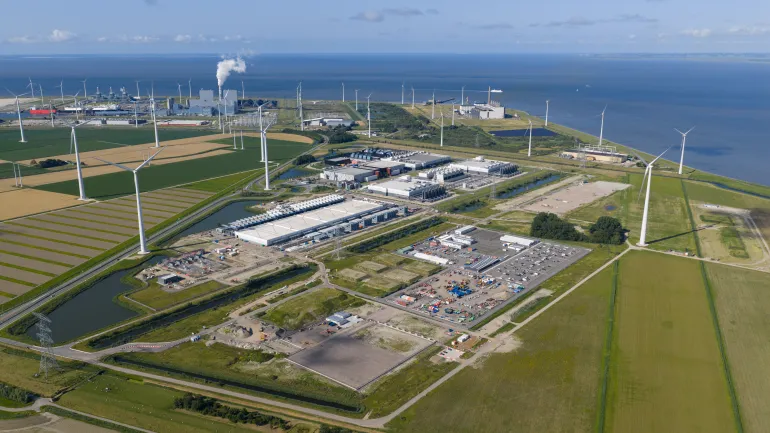
While AI promises efficiency gains and transformative opportunities, its environmental costs are often veiled. Data centres already account for 1.5% of global electricity consumption, and it is estimated that their demand will more than double by 2030, mainly due to data centre energy consumption needs. Beside these problems of energy use, the rapid rise of AI raises broader concerns: from climate degradation and resource depletion to the risk of embedding biases, deepening social inequalities, and undermining human rights.
A recurring theme in the discussion was the “hidden” environmental cost of AI. While cities may benefit from optimised mobility or energy systems, the energy-intensive infrastructure required (for example with data centres, servers, and cooling systems) is often located far from the urban areas in which algorithmic systems are deployed and used. As Maurelli illustrated, “the benefit may be in Barcelona, the damage in Ireland, and the profit in California.” This spatial separation complicates the assessment of AI’s true ecological footprint.
Gómez-Mont also emphasized the role of data governance and indigenous data sovereignty, warning against new forms of digital extractivism where global companies exploit local data and ecosystems. Data sovereignty and local control over digital infrastructure are essential to prevent disproportionate burdens on vulnerable regions, often in the Global South, which may host data centres or owing to weak environmental regulation, suffer the effects of mineral extraction. This issue reflects broader concerns about digital colonialism, where some territories bear the brunt of environmental and social costs while the economic benefits accrue elsewhere.
Equity and inclusion are therefore essential. AI-driven services in mobility, energy, or predictive analytics must be designed to avoid reproducing or deepening social inequalities, threatening human rights, or undermining biodiversity. Many municipalities adopt AI tools without assessing environmental impacts or building the internal capacity to manage them effectively. As panellists stressed, AI is a tool, not an end in itself, and cities must carefully weigh the benefits and trade-offs.
4. Ethical Frameworks and Global Governance
When discussing how to mitigate AI risks and enhance its positive potential, panellists argued for robust ethical frameworks grounded in ethics, transparency, and accountability. These frameworks must be supported by public institutions, transparent criteria, and active citizen participation, ensuring that AI serves the public interest and is compatible with long-term sustainability goals.
The UNESCO Recommendation on the Ethics of Artificial Intelligence (2020) is the first global framework to explicitly include environmental sustainability as a core ethical dimension. Building on this foundation, UNESCO’s ongoing Policy Toolkit for Environmental AI seeks to translate principles into workable tools for governments. The toolkit emphasises:
Intersectional approaches linking environmental, social, and human rights dimensions;
The need to consider the entire AI lifecycle, from data centres and model training to deployment and disposal; and
The establishment of standardization mechanisms and incentive systems to promote greener and more responsible AI practices.
This model of governance must be multilayered combining local, regional, and global action, and it must avoid reducing sustainability to a question of mere energy efficiency. Addressing the environmental impact of AI requires systemic thinking that connects sustainability with issues of fairness, accountability, and inclusion. In this sense, AI should not be conceived merely as a tool for productivity and optimization, but as a mechanism promoting equality, justice, and long-term social transformation. The debate emphasized that responsible AI is not only a technical challenge but a democratic one: it depends on inclusive decision-making, institutional accountability, and shared governance across all stages of the technology’s lifecycle.
France’s national AI strategy offers a practical example through its concept of frugal AI, which is guided by three principles: (1) proportionality (using AI only when necessary); (2) efficiency (minimizing algorithmic and hardware energy use); and (3) targeting (applying AI to areas within planetary boundaries).
Porte noted that France has introduced the first national standard to measure AI’s ecological footprint, contributes to EU-level standardization, and co-leads the Coalition for Sustainable AI with International Telecommunications Union (ITU) and the United Nations Environmental Programme (UNEP), which seeks to coordinate global efforts.
Complementing these national and international initiatives, local action is equally crucial. Imaña Sobrino highlighted ICLEI’s work in developing sustainability impact assessment frameworks and toolkits for cities, together with training programs to build local capacity. Together, these efforts highlight the fact that governance tools must function together with enforcement mechanisms, financial incentives, and inclusive participation to ensure that prevent existing power imbalances are not reinforced.
Conclusion
The session emphasized a shared conviction: AI can be both a driver and a disruptor of sustainability. Technology is not neutral, and neither are governance tools. Achieving sustainable AI requires systemic change: embedding environmental and social considerations into every stage of AI’s lifecycle, from design to deployment; bridging the gap between principles and practice through clear standards and incentives; and empowering cities as innovation hubs to lead nature-positive economies and ensure that AI serves both people and the planet. The panel closed with a call for collaboration across levels of government, academia, and civil society to ensure that AI’s environmental footprint is transparent, accountable, and in harmony with global sustainability goals.
References
Galceran-Vercher, M. and Vidal, A. (2024) “Mapping urban artificial intelligence: first report of GOUAI’s Atlas of U2rban AI”. CIDOB Briefings 56
Pérez-Ortiz, M. (2024) “Sustainability in urban AI”. In Galceran-Vercher, M. and Vidal, A. (2024) Ethical Urban AI in practice: policy mechanisms to establish local governance frameworks. CIDOB Monographs 89.
Van Wynsberghe, A. (2021) “Sustainable AI: AI for sustainability and the sustainability of AI”. AI Ethics, 1, pp. 213–218.
All the publications express the opinions of their individual authors and do not necessarily reflect the views of CIDOB as an institution